
Beef-on-dairy (BOD) is becoming a major driver of beef production in Canada, already contributing about 1 in every 4 beef animals.
With more dairy producers breeding to beef sires, the big question is:
Are we selecting the right genetics for BOD cattle?
What We Did
We analyzed over 210,000 animals from beef-on-dairy systems to understand how key traits are inherited and how they work together.
We looked at traits that matter in your pocketbook:
- Growth (birth weight, daily gain)
- Carcass weight
- Ribeye area
- Marbling
- Backfat
- Lean meat yield
We also analysed expected hybrid vigor (retained heterozygosity) of the animals. Retained heterozygosity is a measure of how much crossbreeding advantage an animal carries. Higher values mean the animal has more genetic diversity from different breeds, which can support better performance.
Key Takeaways for Producers
- Breed diversity drives hybrid vigor
The average retained heterozygosity ranged from 0.00 to approximately 0.63, indicating substantial variation in heterozygosity among breed combinations within the beef-on-dairy production system.
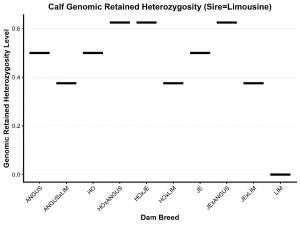
Calves from more genetically diverse dairy cows showed higher retained heterozygosity, while cows already containing Limousine genetics showed lower values. This is expected because the cows are genetically closer to the Limousine bulls thus reducing the level of additional hybrid vigor gained from the mating.
- Genetics moves the needle
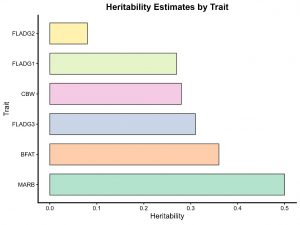
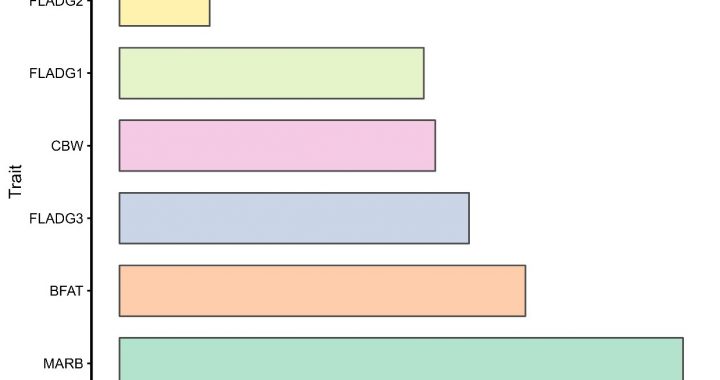
Most traits showed moderate heritability (0.21–0.50)
Translation:
You can make real progress through sire selection
- Traits of importance are linked in favourable ways
Strong positive correlations were observed among growth and carcass weight traits.
Translation:
Selecting the right genetics can simultaneously improve growth rate, carcass weight, and meat yield
- There are trade-offs
Some traits work against each other:
More backfat ⟷ less lean yield
More marbling ⟷ slightly less lean yield
Translation:
Pushing too hard for leanness can hurt quality
Chasing marbling alone can reduce yield
Balance is key.
- We saw big differences in EBV accuracy:
Sires with lots of progeny = highly reliable EBVs (Accuracy = 0.90+)
Sires with few calves = more risk
More progeny = more reliable sires
- What’s Coming Next
We’re building a Beef-on-Dairy Selection Index, which is a smart selection tool built specifically for this system not traditional beef.
It will:
- Balance growth, yield, and quality
- Control excessive fat
- Improve profitability
We are also adding:
- Feed intake, and feed efficiency to target, fewer days on feed and lower feed cost
Take-home message
✔ Beef-on-dairy cattle can compete with the right genetics
✔ Success depends on balancing traits for market goals, not single-trait focus