

Background
The Food and Agriculture Organization of the United Nations (FAO), through the Commission on Genetic Resources for Food and Agriculture (CGRFA), is currently coordinating the preparation of the Third Report on the State of the World’s Animal Genetic Resources for Food and Agriculture (SoW-AnGR). This global assessment provides a comprehensive review of the status, trends, challenges, and opportunities related to animal genetic resources and their management worldwide and serves as an important global reference for policymakers, researchers, and development organizations. The report guides future investments, strengthen conservation and sustainable use efforts, support climate adaptation, and inform implementation of the Global Plan of Action for Animal Genetic Resources and underscores the critical role of animal genetic resources in building resilient, productive, and sustainable livestock systems for the future.
The first report was published in 2007 and established the first global baseline on the diversity and management of animal genetic resources. The second report followed in 2015, documenting progress and emerging challenges. In 2023, the Commission requested FAO and member countries to initiate the preparation of the third report, which is scheduled for presentation to the Intergovernmental Technical Working Group on Animal Genetic Resources in 2026 and subsequently to the Commission in 2027.
The Reporting Process
The report is being developed through contributions from countries, international organizations, research institutions, and technical experts.
ILRI played a leading role in the FAO thematic study on Climate-Smart Management of Animal Genetic Resources, which was selected through a competitive process. The study examined how animal genetic resources can contribute to climate adaptation, resilience, and sustainable livestock development while maintaining genetic diversity.
As part of this process, FAO organized a series of widely advertised webinars to disseminate findings and engage stakeholders in discussions. The webinar covering ILRI’s thematic study on Climate-Smart Management of Animal Genetic Resources and was held on 10 June 2026 and I presented on the “Impact of Climate Change on Animal Genetic Resources: Vulnerability, Resilience, and Adaptability.” The presentation examined how changing production environments are increasing the vulnerability of livestock genetic resources in low and middle income countries (LMICs), while highlighting the resilience of adaptive indigenous breeds and outlining opportunities to strengthen resilience through the sustainable use, conservation, and climate-smart breeding strategies to safeguard these resources for future livestock systems.
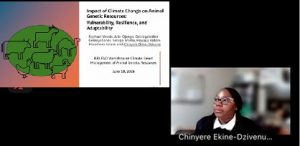
Fig 1. Presentation on the impact of climate change on animal genetic resources: Vulnerability, Resilience, and Adaptability.” delivered by Dr. Chinyere Ekine-Dzivenu.
Link to the University of Alberta Joint Appointment
My participation in this process reflects the value of my joint appointment between ILRI and the University of Alberta. The appointment strengthens collaboration in livestock genetics, genomics, breeding, and climate resilience, while creating opportunities to contribute scientific evidence to global policy processes. The themes discussed during the webinar closely align with ongoing research activities at both institutions.